PROGRAMME
CULTURE & MENTAL HEALTH 2026: YOUTH
Museum Dr. Guislain, Iedereen Leest, TOON and 'Ge durft!' (Hogeschool VIVES) partner up for the third edition of the international conference Culture & Mental Health on 26 and 27 November 2026 in Ghent, Belgium, with a central focus on youth. The conference explores how culture and art can strengthen the mental health and resilience of young people.
TICKETS
Day 1: standard: €105 / student: €80
Day 2: standard: €105 / student: €80
Day 1 + 2: standard: €210 / student: €160
Conference dinner on 26.11: €50
DAY 1
26.11.2026
09:00 Registration, coffee and tea
10:00 - 12:00 PLENARY 1
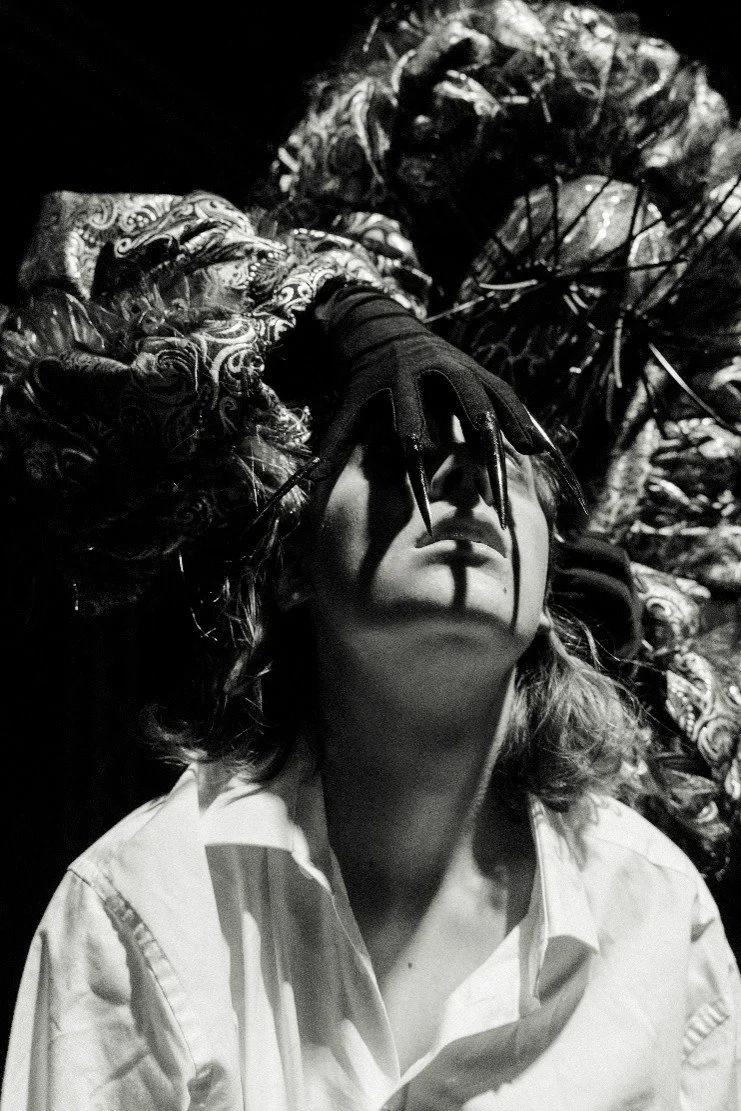
10.00 Opening Performance No Fear - No Shame - No Guilt
An interdisciplinary performance that explores the relationship between body, costume and inner experience. Rooted in lived experience with ocd (obsessive compulsive disorder), the work investigates how textile, movement & sound can make invisible mental processes tangible and visible. The work seeks a poetic language for experiences that are often difficult to express.
Artistic Coordinator Sarah De Geyter
Performers Kato Mergan, Lien Vandenborne, Fleur De Decker
Music and Sound Jan Cannaerts
Costume Design Sarah De Geyter
Lorenzo Frison
10.10 Welcome by Sylvie Dhaene, Director Iedereen Leest
10.15 Keynote by Darren McGarvey, Author, musician ('Loki'), social commentator and journalist, Scotland
10.55 Keynote by Winny Ang, Writer and child and youth psychiatrist, Belgium
11.35 Youth Panel organised by Van Gogh Museum (The Netherlands) and Ge Durft! (Belgium)
12:00 Lunch
13:30 - 15:15 Paper Sessions / Panels
#1 Paper Session: Community
Chair: Sylvie Dhaene, Iedereen Leest
We like to theater
Saša Hudnik, Azum Institute (Slovenia)
The Azum Institute's project, "Cultural Heart of Trzin," focuses on arts-based interventions as a medium for social inclusion. As part of the project, a theatre group of young people with special needs was formed, enabling participants to explore their creativity, develop social skills, and strengthen group cohesion. The group created four short performances. These performances demonstrated the emotional and artistic power of inclusive theatre, generating strong responses from both performers and audiences. The experience of public performance enhanced participants’ confidence, sense of achievement, and social recognition.
Collaborative Artistic Processes Fostering Mental Health: Participatory practices of Rory Pilgrim, the Institute of Anxiety and the Thought Generator
Flóra Gadó, Independent Researcher (Belgium) and Judit Szalipszki, Trafó House of Contemporary Art, Budapest (Hungary)
The paper will examine how collaborative artistic practices can support youth dealing with mental health issues. The presentation will offer a comparative analysis of three distinctive fields: the practice of artist Rory Pilgrim, the work of the collective Institute of Anxiety, as well as the art mediation programme Invisible Gaze developed by Trafó House of Contemporary Arts. The paper argues that these practices function as experimental infrastructures of care. By foregrounding participation and collective storytelling, the works create temporary communities in which young people can articulate and negotiate experiences of vulnerability.
Community Champions: Reading as a means of building community and connection amongst young people
Gemma Jolly, The Reading Agency (England)
The Reading Well Community Champion pilot explored how peer-led, reading-related activities could strengthen the Public Library Universal Health and Wellbeing Offer using the national Reading Well books on prescription programme across four pilot sites – Lancashire, Newcastle, Norfolk and Suffolk. In Lancashire activity focused on young people from three communities: Accrington, Haslingden, and Rishton to develop a programme to support young people’s mental health and wellbeing underpinned by Reading Well for teens.
“Sadness and Play”: Young Children’s Perspectives on Death and Loss in an Intergenerational and Arts-Based Community Project
Zoë Ghyselinck, Consortium for Health Humanities, Arts, Reading and Medicine (CHARM, Ghent University (in collaboration with the Community Health Centre 't Vlot, and Museum Huis van Alijn) (Belgium)
Although youngsters encounter loss, grief, and existential questions in their lives, death and dying remain largely absent from everyday conversations with young people. This paper presents insights from Doodnormaal, toch?, an intergenerational community project developed in 2025. This contribution reflects on how community-based cultural initiatives can provide alternative ways of engaging with mortality across generations.
#2 Paper Session: Lived Experience
Chair: Bart Marius, Dr. Guislain Museum
Space to Breathe: Embedding Youth Voice in Creative Mental Health
Jemma Channing, Arts Council England (England)
This talk will present a national research and advocacy programme that positions creativity as central to young people’s mental health and everyday lives. It explores how youth-led creative practice, when embedded in local systems, can shift how institutions understand, commission and deliver mental health support for 14–25-year-olds. The talk will also share effective strategies for ethical, youth-led cultural work which supports mental health.
Deep Listening as Practice: A Three-Year Collaboration Centring Young People's Voices
Lucia Arias, FACT Liverpool (England)
This presentation explores how The Clatterbridge Cancer Centre NHS Foundation Trust, Teenage Cancer Trust, and FACT Liverpool, with artist Nina Davies, developed a collaborative framework centring young people's lived experiences through time, trust, and deep listening. Over three years, people living with and beyond cancer created an experimental podcast, a fiction film presented as an exhibition at FACT, a publication, and an artwork at Clatterbridge Cancer Centre Liverpool. This paper explores the learning with participants, the artist, and both teams, revealing key elements that allowed young people's voices to genuinely lead the work.
Exploring Perspectives on Wellbeing Through Arts Engagement: Findings from Irish Secondary Schools
Louise Foott, MTU Crawford College of Art & Design (Ireland)
Grounded in human development principles, and using participatory arts-based methods, this talk explores how Irish secondary school students conceptualize and experience wellbeing. Working with two contrasting schools—a community school with a higher concentration of students at risk of educational disadvantage and a private secondary school—the research engages students in collaborative creative workshops. Participants use images, words, and zine-making to express what wellbeing means to them and how it manifests in their everyday lives.
Constructing Cultural Identity: Co-Creating New Understandings of Bicultural Identity and Well-being with Bicultural Youth
Kemi Thompson, Vrije Universiteit Brussel (Belgium)
Despite growing interest in biculturalism and mental health, these topics are often studied through frameworks and methods that inadequately reflect young people’s lived realities. Existing research frequently decontextualizes the relationship between biculturalism and mental health and overlooks the diversity within bicultural youth. This paper therefore conceptualizes bicultural identity development not as an isolated psychological process but as one embedded in social, relational, and structural contexts. Focusing on bicultural youth (aged 15-25) who identified as feeling othered based on visible markers such as race, name, hair texture and religious symbols, the study examines how these societal processes shape their bicultural identity experiences and well-being.
#3 Paper Session: Public Libraries
Chair: Simon Bequoye, Iedereen Leest
This session is curated by the conference chair, supported by Iedereen Leest and UCL Arts & Sciences.
Inequalities matter: Why Public Libraries are essential for tackling youth mental ill-health
Bart De Nil, University College London (UK/Belgium)
Over the last decades public libraries have been asked to take on new roles, one of those is to become part of the social infrastructure promoting public health and tackling health inequalities through creative health. This talk explores the impact of this turn on the role public libraries play in supporting the mental health of young people. Demonstrating that libraries do not function as social infrastructure by virtue of their buildings or universal professional values alone. Rather, ‘social infrastructuring’ emerges through the interaction of organisational mission, local governance, resources, partnerships and the everyday practices of library staff. Introducing the concept of place-mediated social infrastructuring, demonstrating how local contexts shape libraries' capacity to address health inequalities.
Beyond Participation: Quiet Presence and Youth Belonging in Public Library
Linfeng Xie, Antwerp University (Belgium)
In superdiverse societies, public libraries function not exclusively as institutions of information provision or language learning, but also as social infrastructures where transcultural encounters, belonging, and inclusion are negotiated. Research and practice on youth engagement in libraries often emphasize visible participation, such as attendance, programming, interaction, or co-creation. This study argues that such a focus risk overlooking quieter and less institutionally legible forms of engagement, particularly among immigrant and racialized youth. Therefore it foregrounds quiet presence as a significant mode of youth engagement. It enables young people to develop place attachment, experience belonging without compulsory interaction, and participate in everyday placemaking through their embodied occupation of space.
Connection as the Foundation for Inclusivity. How clearly defined frameworks create space for children & youth to belong
Laure Ruts and Lotte Van de Werf, Antwerp City Library (Belgium)
Imagine a library where every young person feels seen, valued, and welcomed. In this session, we explore how genuine connection—supported by intentional frameworks—creates that reality.
We share powerful testimonials in the form of video’s from children like Marcia, who wandered into the library without a purpose and soon discovered a place that nurtured her confidence, reading skills, and sense of belonging. Or Matias, an 18-year-old who came out of loneliness and started his own community fighting this societal problem.
Through these stories, we reveal three anchors of connection: the library as a meaningful third place, warm relationships with staff and empowering programmes. This impact doesn’t happen by accident: it requires structure, clarity, and a committed team.
15:15 Refreshments break
15:30 - 17:00 Workshops
#4 Workshop (FULL)
Standing Still in a Frantic World: Museums as Community Spaces for Youth Mental Health
Jolien Posthumus, Mindfulness in Museums (The Netherlands)
At a time when youth mental health is increasingly framed as crisis, Mindfulness in Museums (MiM) proposes a complementary approach: positioning museums as accessible community spaces where young people cultivate foundational life skills for mental health — together.
MiM is an international hub at the intersection of healthcare, education, the social domain and museums. It translates evidence-based mindfulness interventions from clinical settings into arts-based practices in public cultural institutions. Rather than focusing on treatment, MiM emphasizes lifelong competencies that young people themselves identify as essential: understanding what stress does to the body, learning how to regulate, and experiencing that they are not alone in what they feel.
In MiM sessions, participants pause with art and with their inner world, noticing patterns of thinking, feeling and reacting with openness and curiosity. Artworks function as shared anchors for reflection and dialogue. In this communal setting, young people explore how tension manifests in the body, how thoughts and emotions shift, and how stress and calming systems operate. At the same time, museums invite experiences of awe, joy and appreciation, strong predictors of improved well-being. Practicing this together strengthens co-regulation, belonging and resilience.
Museums are uniquely positioned as inclusive “third spaces”: dynamic cultural environments embedded within society, engaging with contemporary issues while offering room for encounter and perspective. As such, they can function as collective environments for preventive mental health practice.
A key example is the long-term collaboration with the Van Gogh Museum, where youth advisory group The Beeldbrekers co-developed and piloted the programme and remain active advisors. The museum now offers a continuous programme for educational institutions committed to youth mental wellbeing. MiM also includes inclusive adaptations for neurodiverse youth, including programmes in Japan.
(Max. 30 participants)
#5 Workshop
We Are the Street That We Forgotten: Letter Writing as an Act of Letting Go
Iva Ivanova, Living Museum Sofia (Bulgaria)
This workshop invites participants to engage in the intimate practice of writing a letter as an act of letting go The workshop explores how youth can connect with themselves through writing, listening, and reflection. Participants are guided to write a letter to someone, something, or a part of themselves they wish to release: whether it is a memory, an emotion, or an unresolved experience.
The process emphasizes listening-to oneself, to one’s thoughts, and to the body. Youth often live under pressure and distraction, making it difficult to notice inner experiences or sensations. By slowing down and attending to their own feelings, movements, and thoughts, participants can reconnect with themselves. Writing becomes a performative act that externalizes inner experiences while listening-both to oneself and to others-creates a shared space of recognition, trust, and support.
Optional sharing of letters within the group introduces the power of collective listening. Being heard, witnessing others, and acknowledging shared vulnerability strengthens a sense of community and belonging. This collective dimension highlights that personal experiences of release and reflection are not isolated: they can be held and supported by others.
This practice is particularly important for young people whose mental health is increasingly challenged by anxiety, depression, and social pressures. Through writing, reflection, and attentive listening, participants gain tools to process emotions, develop self-awareness, and foster resilience. Creative practices grounded in listening and self-expression can provide meaningful connections, emotional support, and empowerment for youth, bridging private reflection with collective care in a and attentive environment.
(Max. 15 participants)
#6 Workshop (FULL)
Finding Voice through Words. Expressive Writing for Youth Resilience
Dimitra Didangelou, University of Ghent, CHARM & Expressing MySelf Institute (Belgium)
Young people today face multiple pressures, including social inequalities, structural barriers and growing mental health challenges. Many lack accessible spaces where they can safely articulate their experiences and develop a sense of voice and agency. This workshop explores how writing techniques can support young people in reflecting on their experiences and strengthening resilience.
Drawing on principles from expressive writing, the workshop presents practical methods that can be applied in educational, cultural and community contexts. Short literary excerpts from poetry and prose serve as starting points that help young participants connect with themes such as identity, belonging, uncertainty and change. From there, participants are guided through a series of structured expressive writing exercises designed to encourage reflection while maintaining emotional safety.
Expressive writing can allow young people to explore thoughts and emotions without the pressure of producing “good” writing, as there are no right or wrong answers. This allows participants to write freely, without the fear of judgment or evaluation.
Particular attention is given to how writing can foster community and social inclusion. When young people share reflections or listen to others’ perspectives in a respectful environment, writing becomes not only an individual practice but also a means of building connection and mutual recognition.
This workshop offers experiential activities, offering participants concrete tools for implementing expressive writing with young people facing social and structural challenges. The aim is to demonstrate how writing can function as a low-threshold cultural practice that supports voice, resilience and community care.
(Max. 20 participants)
EXTRA: Guided tour in the exhibition A House of One's Own
Join us on a walk through the exhibition A House of One’s Own. It proudly displays a diverse selection of preserved artifacts, including photographs, books, artwork, archives and more. The exhibition takes a personal approach and deviates somewhat from the traditional paths, as we all might do from time to time. From a dreamy warehouse where furniture, kitchenware and sculptures remain to seas of letters and diaries - it all gets a home in A Home of One’s Own.
#7 Object Handeling
Kristine Timperman, Dr. Guislain Museum
More info will follow shortly.
(Max. 15 participants)
18.30 CONFERENCE DINNER
- Not included in ticket, Sign-up required
- Vegan/Vegetarian Dinner
DAY 2
27.11.2026
09:00 Registration, coffee and tea
9.30 - 11.00 Workshops
#7 Workshop:
Stitching for Resilience: Craft, Culture, and Regenerative Practice
Henrike Gootjes, ArtEZ Studio (The Netherlands)
This 90-minute hands-on workshop invites participants to experience embroidery as a practice of reflection, resilience, and cultural expression. Building on the ideas presented in From Exhaustion to Regeneration: Culture, Craft, and Youth Mental Resilience, the workshop explores how slow craft practices can counter systems that exhaust attention, identity, and wellbeing.
Across cultures, stitching has long served as a quiet but powerful form of storytelling, resistance, and community building. Today, many young people are rediscovering textile traditions as ways to process emotions, reclaim cultural narratives, and express agency in times of uncertainty.
Participants will begin with a short introduction to regenerative thinking and the role of craft in supporting mental wellbeing and cultural continuity. Examples from diverse contexts—including Turkey, Ukraine, Jordan, Gaza, Morocco, and the United States—illustrate how embroidery practices carry memory, resilience, and meaning.
Participants will then create a small embroidered symbol, word, or pattern representing resilience, care, or regeneration. No prior experience is needed.
The workshop creates a reflective space for conversation, making, and connection while demonstrating how simple creative practices can support wellbeing and strengthen cultural imagination in youth and community settings.
(Max. 20 participants)
#8 Workshop:
Needle Felting for Resilience and Expression
Carolien Evers, De Vrolijkheid (The Netherlands)
Developed by textile artist Carolien Evers through her extensive work with youth and asylum seeker communities at De Vrolijkheid, an arts organization that offers creative workshops to children, teenagers, and families living in Dutch asylum seeker centres, this practice shows how textile craft can become a space of agency, expression, and connection even in contexts of uncertainty. (www.vrolijkheid.nl)
This hands-on workshop invites participants to explore needle felting, a tactile textile technique in which wool fibers are repeatedly poked with a barbed needle to interlock the fibers. This technique is accesible to a wide community and allows lived experiences to be expressed.
Participants will learn basic needle felting techniques and create a small wearable felted artwork—a patch, badge, or symbolic form—expressing a personal theme of care, resilience, or identity. The process will be facilitated step-by-step by Carolien, with accessible materials for all skill levels.
Alongside the making, Carolien will share insights from her community practice, including the impact and challenges of working with young refugees through craft, highlighting how slow, embodied making supports wellbeing, cultural continuity, and self-expression.
This workshop provides a reflective and interactive space where making becomes a means to explore identity, materiality, and resilience, illustrating how craft practices can contribute to youth mental health, cultural connection, and empowerment.
(Max. 20 participants)
#9 Workshop:
#HACKpand: how to include youth in the library
Deniza Miftari, Kenniscentrum ARhus (Belgium)
#HACKpand is a youth-driven initiative built around recurring activities in which young people take on the role of “local heroes”. Their lived experiences, skills and perspectives are recognised as legitimate forms of knowledge that shape the programme. This approach challenges dominant, top-down cultural models and replaces them with co-creation, ownership and trust — all essential conditions for wellbeing.
The initiative emerged from the observation that many young people feel alienated from cultural and institutional spaces. By creating low-threshold, safe environments where young people host activities, share expertise and set agendas, #HACKpand fosters belonging, agency and mental resilience. Culture here is not something that is consumed, but something that is actively produced and shared.
During the workshop, participants will engage with the #HACKpand methodology through concrete cases and participatory exercises. We will demonstrate how recurring knowledge-sharing activities — such as conversations, creative sessions or peer-led learning moments — function as cultural practices that support wellbeing by strengthening voice, recognition and connection.
This session contributes to the strand Culture, participation and wellbeing by offering a practical, transferable model for embedding youth leadership in cultural contexts. It invites professionals in libraries, cultural organisations, education and youth work to rethink whose knowledge counts and how cultural spaces can become places of care, empowerment and sustained engagement rather than one-off participation.
Participants will leave with insights and tools to integrate participatory, wellbeing-oriented practices into their own cultural work.
(Max. 30 participants)
#10 Workshop (FULL)
Creativity as a Tool for Mental Resilience: Presenting the LKCA & BKJ Toolbox for Arts Educators
Anne Graswinckel and Finn Minke, LCKA (The Netherlands)
How can arts educators support the mental well-being of young people without stepping into the role of therapists? While research increasingly highlights the positive impact of cultural participation on youth well-being, many practitioners struggle to translate these insights into everyday practice.
The national centres LKCA (Netherlands) and BKJ (Germany) developed a practical toolbox to help arts educators work with diverse groups of young people in ways that strengthen resilience, inclusion and participation. The toolbox combines scientific insights with field-tested practices from arts educators working in different social and cultural contexts.
In this interactive workshop, participants will actively explore and test elements of the toolbox. Through short exercises and reflection moments, we will examine how creative practices can create safe spaces for expression, lower participation barriers, and strengthen young people’s sense of belonging and agency.
The session invites participants to reflect on how the cultural field can contribute to more inclusive approaches to youth mental well-being.
(Max. 30 participants)
EXTRA: Guided tour in the exhibition A House of One's Own
Join us on a walk through the exhibition A House of One’s Own. It proudly displays a diverse selection of preserved artifacts, including photographs, books, artwork, archives and more. The exhibition takes a personal approach and deviates somewhat from the traditional paths, as we all might do from time to time. From a dreamy warehouse where furniture, kitchenware and sculptures remain to seas of letters and diaries - it all gets a home in A Home of One’s Own.
11.00 Refreshments break
11.15 - 13.00 Paper Sessions/Panels
#11 Panel: Lived Experience
Chair: Agita Lūse, Riga Stradiņš University
The creativity turn in youth mental health care in Latvia
Agita Lūse (moderator) Riga Stradiņš University, Krista Anna Belševica, writer and creativity coach, Anda Lāce, artist and curator and Alise Cepurīte, NGO Ogle (Latvia)
In Latvia, the move to conceptualise mental illness beyond a biomedical framework came relatively late. Under Soviet rule, mental health care was exclusively psychiatric; psychotherapy, art therapy, music therapy, and mental health NGOs were absent. For decades, public engagement with psychological suffering was limited to its portrayal in literature, theatre, and art exhibitions. While art can foster empathy, maintaining mental well-being also requires that people are listened to and understood, whatever forms of expression they use. In recent years, young people in Latvia have been the most willing to speak openly about mental health and well-being. They have been the ones who take the initiative to organise various creative activities – from workshops and creative communities to performances and festivals – while creative professionals and medical workers have taken on supporting roles.
This panel brings together four participants who have had direct encounters with mental distress, either in their own lives or in the lives of their loved ones, to present innovative approaches to promoting mental health among young Latvians. Writer, project curator, and creativity coach Krista Anna Belševica will discuss her experience leading poetry workshops for adolescents and young adults. The artist and curator of the Sansusī Wellbeing Residency, Anda Lāce, will present visual and performance art masterclasses focused on mental health topics that she has conducted with pupils in general education, as well as her long-term collaboration in the development of joint art projects within two special education institutions serving children with mental health difficulties. Alise Cepurīte from the NGO Ogle will analyse the mental health festival “Ogle,” which since 2019 has invited young people to employ creative strategies to support their own well-being and that of others. The discussion will be moderated by social anthropologist Agita Lūse, whose research has examined experiences of mental distress and help-seeking patterns.
#12 Paper Session: Community
Chair: Alexander Vander Stichele (FARO)
xMINERVA Project (Museum, Innovation, Neurosciences: Effects of and Reactions to the Value of Art)
Vanessa Carlon, Palazzo Maffei Fondazione Carlon and the WHO Collaborating Center for Mental Health Research at the University of Verona (Italy)
Engagement with arts and cultural activities has been increasingly recognised for its role in promoting mental health and psychological well-being. Within this framework, this paper explores the Museum as a cultural and social space that actively contributes to practices of care, in line with the conference strand on medical humanities, mental health and community-based cultural practices. The study presents the results of a structured museum-based intervention embedded within the MINERVA Project.
Creative Arts Education and Young People's Mental Health and Wellbeing: Findings from 'Creativity for All' Project
Sude Isil Bastug, University College London (UCL), Keri Wong, University College London (UCL) and LucyKennedy, National Saturday Club (NSC) (UK)
Partnering with the National Saturday Club (NSC) - a UK charity that partners with universities, museums/galleries and art/cultural spaces to give young people access to free creative arts education - this study examines how an 8-month creative education programme for 13–16-year-olds living with existing inequalities in the UK impacts young people’s psychosocial outcomes. The findings show how being part of a creative community helps young people form meaningful connections and contribute to their mental health and wellbeing.
Happy Place - Co-creating Youth-Led Wellbeing in the Museum
Becky Jefcoate, Fitzwilliam Museum, University of Cambridge (England)
How can cultural institutions meaningfully support young people’s mental health in a time of rising anxiety, disconnection, and emotional burnout? Happy Place is a creative, art-based wellbeing project developed with and for 16–25-year-olds at the Fitzwilliam Museum, exploring how co-creation, sensory design, and playful experimentation can transform a museum into a space of care, trust, and emotional safety.
More light! Eduards Veidenbaums museum in Latvia sheds light on youth mental health
Inga Surgunte, Culture and Health Latvia (Latvia)
The project “More Light!”, implemented by the Eduards Veidenbaums Memorial Museum “Kalāči” from February 2022 to July 2023, explored how cultural heritage and contemporary art can support young people’s mental health and well-being. The initiative placed youth at the centre of the museum’s activities, transforming the historical site into a space for reflection, dialogue, and creative expression. Overall, “More Light!” demonstrated how museums can become active partners in promoting youth mental health.
#13 Paper Session: Health Inequities
Chair: Thomas Kador, University College London
The sound of survival: Navigating Institutional Trauma through Participatory Radio in Antwerp
Katrin Lohmann, hell-er vzw (Belgium)
Radio Begijnenstraat is a prison-based participatory art project in the psychiatric wing (Wing F) of Antwerp Prison. The project utilizes audio and recording as a flexible medium to navigate the unpredictable mental states and high distress levels of prison life. While my collaborators are legally adults, many are aged 18 to 21 and transition directly from foster care, youth psychiatry, or juvenile detention. For these chronically institutionalized individuals—marked by a lifetime of attachment trauma and confinement—standard therapeutic models often fail to penetrate the weight of their history, particularly within a carceral setting that further stifles autonomy. Through the case study of Radio Begijnenstraat I will demonstrate the value of participatory dramatic arts and music in carceral mental-health contexts, especially for young incarcerated adults.
Talgarth Asylum - Spectrum
Michael Corr, Cardiff University Welsh School of Architecture (Wales)
This talk presents the most recent work of Spectrum, a ground breaking undergraduate design unit at the Welsh School of Architecture, which focuses on the intersection between neurodivergence, youth and architecture. The design unit exploring the revitalization of the former ‘Lunatic’ Asylum in Talgarth mid Wales opened in 1900 and closed in 2000. The work focuses primarily on health inequities, through innovative cultural and artistic design projects that address inequalities and structural barriers. It was developed from the dissatisfaction with lived experiences, and the aspiration to design inclusive places. The students’ work reveals systematic scars that become the creative starting point for their projects. Within our design Unit, we practice what we preach, striving to cultivate a ‘safe space’ for young people to test their design ideas and this new mode of working has led to exciting, diverse, and boundary-pushing outcomes.
Creative Participation and Youth Wellbeing: Strengthening Access in Disadvantaged Coastal Communities in England, Multi-Site study
Kristof Santa, University of Liverpool (England)
This presentation outlines approaches and insight from creative participatory work with young people, in the Coastal Community & Creative Health (CC&CH, 2024–2027) project across three coastal sites: Blackpool, Weston-super-Mare and Hastings. We will share our findings and learning from our approaches to applying creative participatory methods and analysing creative outputs. It will also reflect on how these approaches can strengthen community engagement and inform community-based provision that supports prevention-focused approaches to young people’s mental health.
Bridging Evidence and Experience: Evaluating the Creative Fusion Festival 2026
Adam Burns, University of Liverpool (England)
Health inequalities are particularly stark in many coastal communities, where young people experience higher rates of mental health challenges. Creative health programmes can strengthen community-based support, yet demonstrating their impact for policymakers and commissioners remains a persistent challenge. The youth-led Creative Fusion Festival, held in June 2026, explores how creative participation shapes young people’s wellbeing, while providing an opportunity to test scalable, co-produced evaluation approaches. The talk will outline an approach to evaluate creative health festivals, demonstrated through the case of Creative Fusion festival.
Our Story – using comic book art to explore and express young people’s experiences of the UK care system
Elvie Thompson, The British Library (UK)
This project aimed to improve the wellbeing of young people aged 15-25 with lived experience of the UK care system (foster care, kinship care and care homes). Care-experienced young people are more likely to have experienced early adversity including abuse, neglect or other forms of trauma. They are consistently found to have a much higher prevalence of mental ill-health compared to the general population. During the project 13 young people created a comic book telling stories of their experiences of care. The presentation will share how the project was delivered and how the powerful outcomes for the young people were achieved and also reflect on the impact the project had on the Children’s Services team.
#14 Panel: Health Inequities / Lived experience
Chair: Rachel Moss, GEM
You can’t be what you can’t see!
Rachel Moss, (moderator) Group for Education in Museums (GEM), Alice Le Page, Museums Development South West, Jenny Pistella, Westminster Adult Education Service (WAES) (UK)
Group for Education in Museums (GEM) is currently working with seven museums (or groups of organisations) on an Inclusive Pathways Action Research Programme aimed at unlocking barriers to work experience, work placements and inclusive pathways, be it new initiatives or developmental work of existing work-based programmes.
This panel discussion would provide an overview of GEM’s approach to career pathways, along with hearing from speakers from two of the projects with lived experience. Firstly, an early career professionals boot camp run by Museums Development South West, and secondly a project aiming to make apprenticeships more accessible for autistic individuals, set up by Westminster Adult Education Service (WAES), freelance consultant Emily Elsworth and University of Cambridge Museums. The second project will result in an online toolkit which will be disseminated as a resource for museums and cultural organisations.
This discussion will explore creative approaches to supporting young people’s wellbeing through inclusive pathways work that opens doors for underserved young people into cultural workplaces, such as individuals who have lived experience of being neurodivergent. Both of the projects have come from requests from the participants identifying a need for this kind of work. This approach is about fostering future careers, supporting personal and professional development, offering inclusive practice and building confidence. As well as supporting individuals, this work is being shared with the wider community via a community of practice group, and contributes to the strategic direction of other cultural organisations.
#15 Panel: Policy
The panel members, who will will reflect on policies and youth mental health, come from the fields of policy, research and practice:
Bart De Nil (moderator/chair), UCL Arts and Sciences (Belgium)
Kato Vanpoperinghe, policy officer Culture and Wellbeing, Flemish Department Culture, Youth and Media (Belgium)
Bart Marius, director Dr Guislain Museum (Belgium)
Antonella Poce, professor of Experimental Pedagogy at the Department of History, Humanities and Society at the University of Rome Tor Vergata (Italy)
Kornelia Kiss, head of Culture & Health at Culture Action Europe (Europe)
Monica Urian, policy officer at the European Commission – Directorate General Education, Youth, Sport and Culture (Europe)
13.00 Lunch
14.00 PLENARY 2
Host Bart De Nil, conference chair
14.00 Welcome by Helena Calleeuw, Ge Durft! (VIVES Hogeschool & DURF)
14.05 Keynote by Bart Temmerman, Secretary-General of the Department of Culture, Youth and Media, and Karine Moykens, Secretary-General of the Department of Care, Flanders
14.20 Keynote by Nuala Morse, Associate Professor in Museum Studies at the University of Leicester, UK
Museums and Youth Mental Health
14.50 Keynote by Thomas Kador, Associate Professor in Creative Health, and Ranjita Dhital, Associate Professor in Interdisciplinary Health Studies at University College London Arts and Sciences, UK
Creative transdisciplinary research for youth wellbeing from the global majority
15.25 Keynote by Nils Fietje, Technical Officer within the Behavioural and Cultural Insights (BCI) Unit at the WHO Regional Office for Europe, Denmark
WHO-report on Arts and Youth Mental Health
15.55 Q&A
16.10 Closing words by Bart Marius, director Dr. Guislain Museum
Closing drink